SpaceX Plans $55 Billion Terafab Chip Facility in Texas
SpaceX files plans for a $55B Terafab in Texas to build in‑house AI and robotics chips — video and transcript.
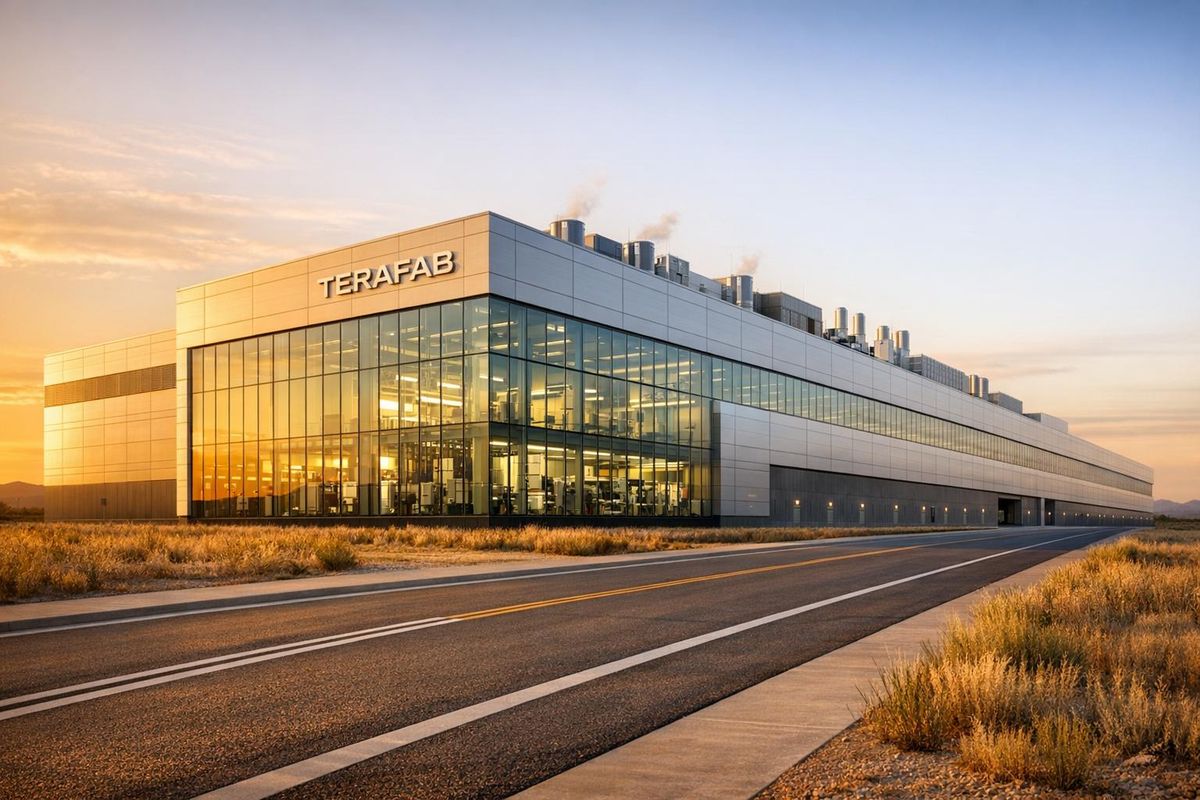
SpaceX, led by Elon Musk, has announced plans to invest $55 billion in constructing a cutting-edge chip manufacturing facility in Texas, marking a major step toward in-house semiconductor production. The proposed "Terafab" facility will be located in Grimes County, near Houston, and aims to address critical chip shortages for Musk’s companies, including SpaceX’s AI and robotics operations.
Vision for In-House Chip Manufacturing
Musk has long expressed frustration over the lack of high-powered chips necessary to support his ventures, such as SpaceX's AI data centers, Tesla's full self-driving (FSD) technology, and Optimus robots. To combat this bottleneck, SpaceX plans to manufacture its own chips. "Musk has said for a while now that he can't get enough high-powered chips... so he said, 'You know what? I'm going to make my own,'" explained Pras Subramanian, Yahoo Finance’s Senior Autos Reporter.
The Terafab facility represents a bold and ambitious undertaking. Initial estimates peg the investment at $55 billion, but the cost could soar to $119 billion if all planned phases are completed. According to a Morgan Stanley report, the first chips from Terafab are projected to roll out no earlier than mid-2028, due to the complex and time-intensive nature of semiconductor manufacturing.
sbb-itb-6fb0794
Challenges Ahead
The development of a semiconductor fabrication plant of this scale faces significant hurdles. Expertise, technical challenges, and scalability will pose persistent issues, according to industry analysts. Subramanian highlighted the difficulties of achieving a high yield of usable chips, which is critical to making such a facility viable. "You want to be able to make enough chips that are actually of quality... It’s very difficult to get the yield they want", he said, noting that expertise from established players like Taiwan Semiconductor Manufacturing Company (TSMC) or Samsung will be essential to overcome these challenges.
Reports also suggest that SpaceX has started hiring talent from Taiwan, potentially sourcing engineers from TSMC to support Terafab’s ambitious goals.
Partnership With Intel

SpaceX has enlisted Intel as a partner for this endeavor, leveraging the semiconductor giant’s expertise. Intel is expected to provide assistance with its next-generation 14A manufacturing process, which Musk believes will mature in time to support Terafab’s operations. "He’s acknowledging that he needs outside help", Subramanian said, referring to Intel's critical role in the project.
This partnership not only underscores the complexity of semiconductor fabrication but also highlights SpaceX’s reliance on experienced collaborators as it ventures into unfamiliar territory.
Broader Implications for SpaceX and Tesla
The announcement of Terafab comes as SpaceX prepares for its highly anticipated initial public offering (IPO), with a potential valuation exceeding $1.75 trillion. Despite the massive capital outlay required for the project, Musk's investors appear to remain optimistic about the long-term potential. "SpaceX is its own thing... People are on the Musk train, and they’re okay with these massive investments", Subramanian noted.
The chips produced by Terafab will also likely benefit Tesla, which is increasingly dependent on semiconductors for its electric vehicles and autonomous driving technologies. Tesla’s ties with SpaceX continue to deepen, underscored by a recent $2 billion investment from Tesla into SpaceX to support collaborative efforts.
Looking Forward
While the Terafab project is still in its early stages, its potential to disrupt the semiconductor industry is significant. Musk’s ambition to vertically integrate chip production aligns with his broader strategy of reducing reliance on external suppliers and ensuring technological independence. However, with an estimated timeline stretching several years and a price tag that could surpass $100 billion, the realization of this vision is far from guaranteed.
As Subramanian remarked, "It’s going to cost more money, need more people, and require more expertise", adding that the stakes are extraordinarily high as SpaceX begins this monumental journey. Whether Musk’s gamble will pay off, only time will tell.
Comments ()