SpaceX announces $1.25 trillion merger with xAI
SpaceX to merge with xAI in a potential $1.25T deal; plan aims to fund orbital data centers, Starlink growth and an IPO.
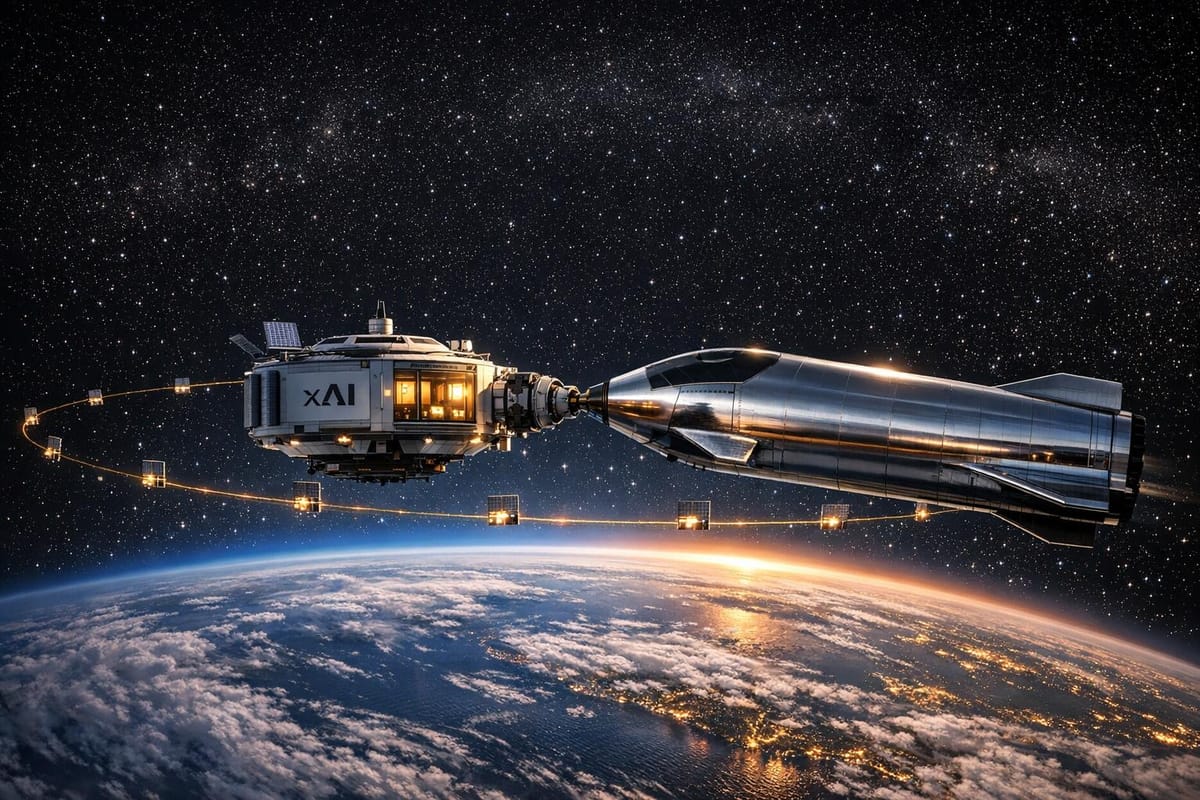
In a groundbreaking announcement on February 2, 2026, Elon Musk revealed that SpaceX will merge with his artificial intelligence company, xAI, in a deal valued at $1.25 trillion. The merger, which is poised to be the largest corporate consolidation in history, was disclosed in a blog post published on SpaceX’s official website. This major development comes in the lead-up to SpaceX’s highly anticipated initial public offering (IPO), expected to take place in late June 2026.
Structuring the Merger
According to reports from Reuters, the transaction is structured as a triangular merger. This approach allows xAI to function as a subsidiary of SpaceX while minimizing the latter’s risk exposure to any liabilities or debts tied to xAI. Despite the merger’s monumental valuation, xAI is reportedly burning through approximately $1 billion each month, raising questions about the company’s long-term financial stability.
In January 2026, xAI completed a significant $20 billion funding round, further fueling its ambitious operations. However, regulatory scrutiny has intensified. Authorities in Europe, Asia, and the United States are investigating xAI after reports surfaced that its Grok AI model had been used to produce non-consensual sexual images of both adults and minors.
Pioneering Solar-Powered Orbital Data Centers
Elon Musk outlined a key reason for the merger: the development of solar-powered orbital data centers. Musk emphasized the need to address the escalating costs and sustainability challenges of traditional terrestrial data centers, including high construction expenses, energy consumption, and environmental concerns.
SpaceX has already initiated steps toward this ambitious project. On January 30, 2026, the company filed an application with the Federal Communications Commission (FCC) to deploy up to one million satellites. These satellites would be designed to harness near-constant solar energy and employ radiative cooling techniques, eliminating the need for water-based cooling systems. Musk’s vision reflects a broader industry trend, with companies like OpenAI and Google also exploring the potential of space-based computing infrastructure.
Still, skepticism abounds. Some analysts have suggested that the orbital data center concept may serve as a means to support elevated valuations ahead of SpaceX’s IPO rather than representing an immediately viable solution. Scientific concerns have also been raised. Harvard astrophysicist Jonathan McDowell warned about risks to astronomy, as well as the potential for Kessler syndrome - a chain reaction of orbital collisions.
Starlink at the Core of SpaceX’s Valuation
Beyond the orbital data center initiative, SpaceX plans to use IPO proceeds for other high-profile ventures, including Starship development, Moonbase Alpha, and potential Mars missions. However, its Starlink satellite internet service remains the backbone of SpaceX's valuation. In 2025, Starlink reportedly accounted for 67–70% of the company’s total revenue, estimated to fall between $10 billion and $11.8 billion. Subscriber growth has been particularly robust, with the user base more than doubling annually since 2023 and projections of 18.4 million subscribers by the end of 2026.
SpaceX’s leading position in the satellite internet market faces limited competition, as rivals like Amazon’s Project Kuiper and China’s Qianfan and G60 constellations are still in earlier stages of deployment. Additionally, China lags behind in reusable rocket technology, further solidifying SpaceX’s competitive edge.
Challenges and Opportunities in the Tech Landscape
The merger and upcoming IPO come at a time of heightened volatility in the broader technology sector. Economic uncertainties, labor-market disruptions driven by AI, transitions in Federal Reserve leadership, and geopolitical instability have all contributed to turbulent market conditions. Despite these challenges, 2026 is shaping up to be a pivotal year for AI-driven IPOs, with companies like OpenAI and Anthropic potentially following SpaceX’s lead.
While the $1.25 trillion merger positions SpaceX and xAI as a dominant force in both aerospace and artificial intelligence, questions remain about how these companies will deliver on their ambitious promises. As one analyst noted, "Periods of market turbulence can create opportunities, but IPOs of this magnitude carry equally significant risks." Investors are cautioned to prioritize "fundamentals and verifiable data rather than narratives alone", especially as tech valuations remain historically elevated.
As SpaceX approaches its IPO window, the merger with xAI not only cements Elon Musk’s role in shaping the future of space, AI, and sustainability but also raises the stakes for delivering on the high expectations surrounding these initiatives.
Comments ()