SpaceX achieves major milestone by launching its 10,000th satellite
Photographer Joshua Rozells compiles 343 frames of satellite streaks, highlighting growing satellite light pollution.
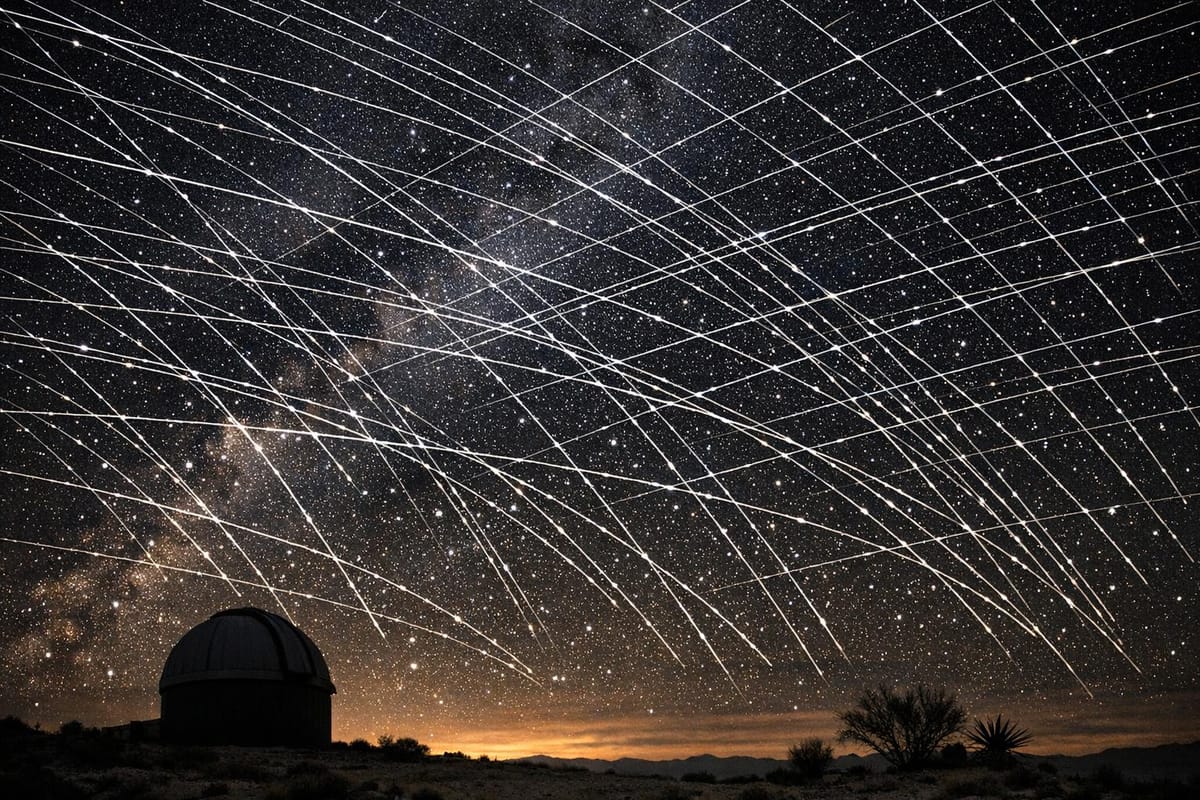
This week, SpaceX reached a remarkable milestone with the launch of its 10,000th satellite into low-Earth orbit. The scale of SpaceX's satellite network, primarily driven by its Starlink program, is unprecedented and continues to grow at an astonishing pace. While this achievement highlights advancements in global internet access, it also brings attention to the challenges posed by the rapid increase in satellites.
One individual shedding light on these challenges is Australian photographer Joshua Rozells. Through his striking composite image, Swamped Skies, Rozells has visually captured the impact of satellite proliferation on the night sky. The photograph, which consists of 343 combined images taken over 85 minutes, starkly illustrates the growing number of satellites streaking through what was once a pristine sky.
"I was surprised", Rozells shared with PetaPixel. "I had previously seen satellite streaks in my photos but never this many. Previously I might have seen a few over the course of the night, but this night had streaks in almost every photo, particularly those taken in the 90 minutes or so after sunset."
Rozells created the image in Western Australia’s Pinnacles, an area known for its dramatic limestone formations. Taken back in January 2021, the photograph remains relevant as the number of satellites in orbit has multiplied significantly since then. According to Rozells, creating Swamped Skies was an intricate process. "The end result is 343 photos (over 85 mins) worth of satellite images blended together with a low-light level photo used for the foreground", he explained. To emphasize the satellite trails, Rozells adjusted the sky’s contrast, highlights, and whites, while using Photoshop to meticulously blend the trails and ensure consistency in sky color.
The astrophotographer was struck by the increasing frequency of satellite launches and the associated lack of regulatory oversight. "In most countries, there are very few restrictions for launching satellites, as long as you have a legitimate purpose for doing so", Rozells noted. He pointed out that large companies like SpaceX have been able to launch as many satellites as they wish with minimal pushback. While these satellites provide internet access to remote areas - a significant benefit - they also exacerbate issues like light pollution.
Rozells emphasized that satellite light pollution not only affects astrophotography but also complicates scientific research. "It makes telescope data less reliable and research more time-consuming", he explained. He also noted the broader implications for people seeking to experience the natural night sky, which is increasingly obscured by urbanization, light pollution, and now, satellite light pollution.
"It’s becoming harder and harder to experience the grandeur of the unpolluted night sky", Rozells said. His image has sparked awareness about the issue, especially among those living in areas already affected by high levels of artificial light. "I see it as a warning of the effects of satellite light pollution", he added. "That this is an issue that is getting exponentially worse and it will continue to do so if we do not take major steps to mitigate the problem. But it also shows the means in which humans have been able to connect people in the most remote areas of the world to the internet - something that is truly remarkable."
As SpaceX continues its ambitious endeavors, Rozells’ work serves as a poignant reminder of the trade-offs that accompany technological progress, urging a balance between innovation and preserving the natural night sky.
Comments ()