SpaceX cancels Falcon Heavy launch due to unfavorable weather conditions
SpaceX scrubbed the Falcon Heavy ViaSat-3 F3 launch April 27 due to poor weather; new date pending.
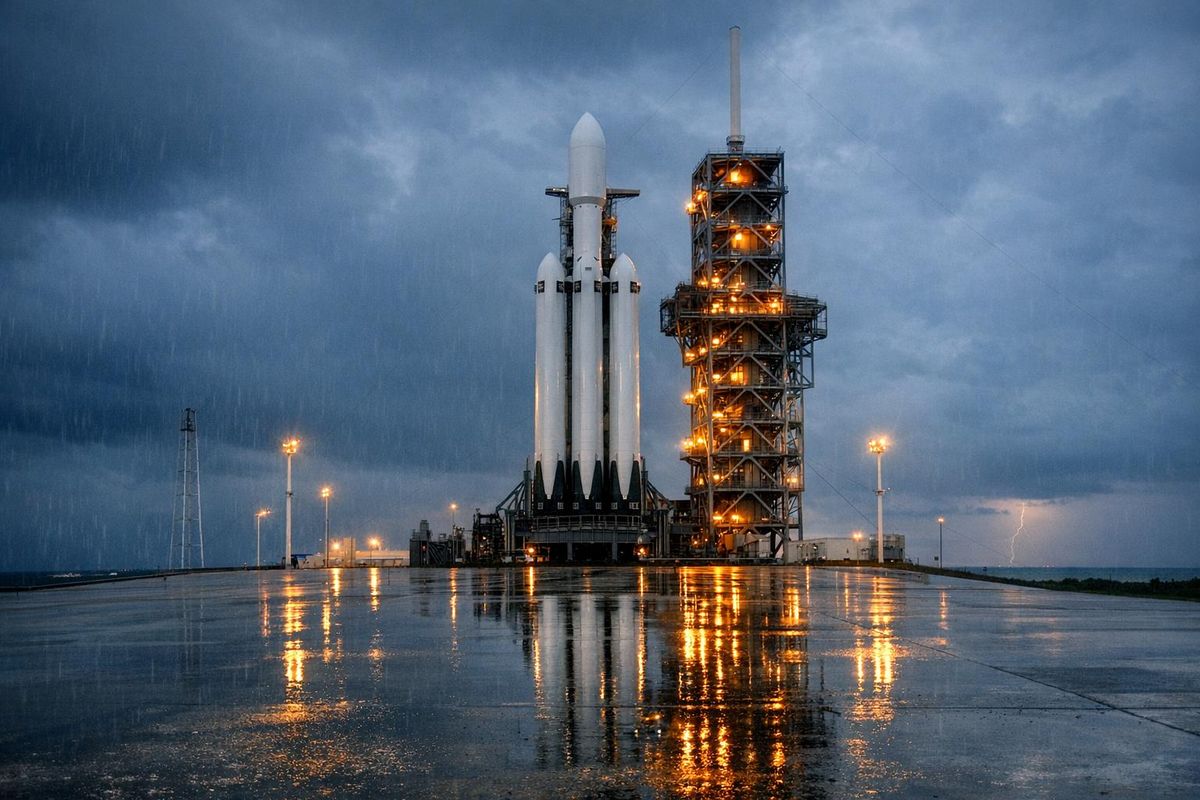
SpaceX was forced to cancel the highly anticipated launch of its Falcon Heavy rocket on Monday, April 27, citing unfavorable weather conditions in the area. The mission, which was set to lift off from NASA’s Kennedy Space Center, marks the company’s first Falcon Heavy launch in over a year and a half. A new launch date has yet to be announced.
Scrubbed at the Last Minute
The Falcon Heavy rocket was moments away from liftoff when SpaceX made the decision to scrub the launch due to deteriorating weather conditions. The Eastern Range is reportedly reviewing scheduling options, including logistical considerations involving the unloading of NASA’s Space Launch System core stage from the Pegasus barge.
The Falcon Heavy rocket, known for its triple-booster design, was set to carry the ViaSat-3 Flight 3 communications satellite into a geosynchronous transfer orbit. The 6-metric-ton satellite was scheduled for deployment from the rocket's upper stage nearly five hours after launch.
sbb-itb-6fb0794
Unfavorable Weather Persists
Meteorologists with the 45th Weather Squadron had forecasted a 70% chance of favorable conditions during the launch window, but concerns about cumulus clouds and surface electric field rules ultimately led to the cancellation. According to launch weather officers, "A Carolina Low is expected to push a weak back door cold front through central Florida early Monday morning. With the primary window opening around the time the sea breeze will develop, the position of that frontal boundary will determine if clouds are enhanced over the Spaceport."
No new date has been confirmed for the rescheduled launch, which will follow an easterly trajectory when it eventually takes place.
Boosters and Mission Details
The ViaSat-3 F3 mission will feature a combination of new and previously flown hardware. The Falcon Heavy’s two side boosters, tail numbers 1072 and 1075, have flown once and 21 times, respectively. Both will attempt landings at Landing Zone 2 (LZ-2) and Landing Zone 40 (LZ-40) at Cape Canaveral Space Force Station. The center core, tail number B1098, is a brand-new booster and will be expended into the Atlantic Ocean following its first and only flight.
This mission, the 12th Falcon Heavy launch since the rocket's debut in 2018, is set to deliver the final satellite in the ViaSat-3 constellation. Dave Abrahamian, Viasat’s vice president of Satellite Systems, emphasized the significance of the moment, stating, "It’s kind of the end of an era. We’ve been working this program for over 10 years now. So that’s a good chunk of life that’s gone by over the course of the program."
Abrahamian also noted the technological advancements and achievements made during the program’s lifespan. "It’s a different world now than when we started the program. Back then, we had a handful of satellites in orbit. Since then, we’ve launched the two ViaSat-3s, we merged with Inmarsat, we’ve got the third one (ViaSat-3) ready to go now. So totally different world, different feeling, and it’s pretty cool to have been part of it all", he said.
Advancements in Satellite Design
The ViaSat-3 F3 satellite, manufactured by Boeing, will target the Asia-Pacific region, adding over 1 Terabit per second (Tbps) of capacity to the Viasat network. Abrahamian highlighted the flexibility of the satellite’s design, explaining, "Two of the hallmarks of the ViaSat-3 constellation are a huge amount of just absolute capacity, but also the flexibility to put it wherever you need it, whenever you need it."
Using phased array technology, the satellite can dynamically allocate spectrum and form beams wherever needed within its coverage area. "We really don’t have the issue of trapped capacity here. So it’s a matter of following the demand wherever it is, within that spacecraft’s field of view", Abrahamian said.
The satellite’s electric propulsion-friendly orbit will allow for a faster transition to its operational position at 158.55 degrees East along the equator, compared to previous launches. Abrahamian explained, "Falcon Heavy is a more powerful vehicle than Atlas 5 was, so they can put us in a more favorable transfer orbit for the electric propulsion."
Looking Ahead
Once launched, the ViaSat-3 F3 satellite will undergo a series of deployment stages and checkouts before being handed off by Boeing to Viasat for operational use. While no new launch date has been confirmed, the mission promises to play a key role in enhancing connectivity for airline customers and other users in the Asia-Pacific region. For now, SpaceX and Viasat await the next opportunity to bring this ambitious mission to fruition.
Comments ()