SpaceX schedules Falcon 9 launch with 29 Starlink satellites
SpaceX plans a pre-dawn Falcon 9 launch from Cape Canaveral carrying 29 Starlink satellites; booster to land on drone ship.
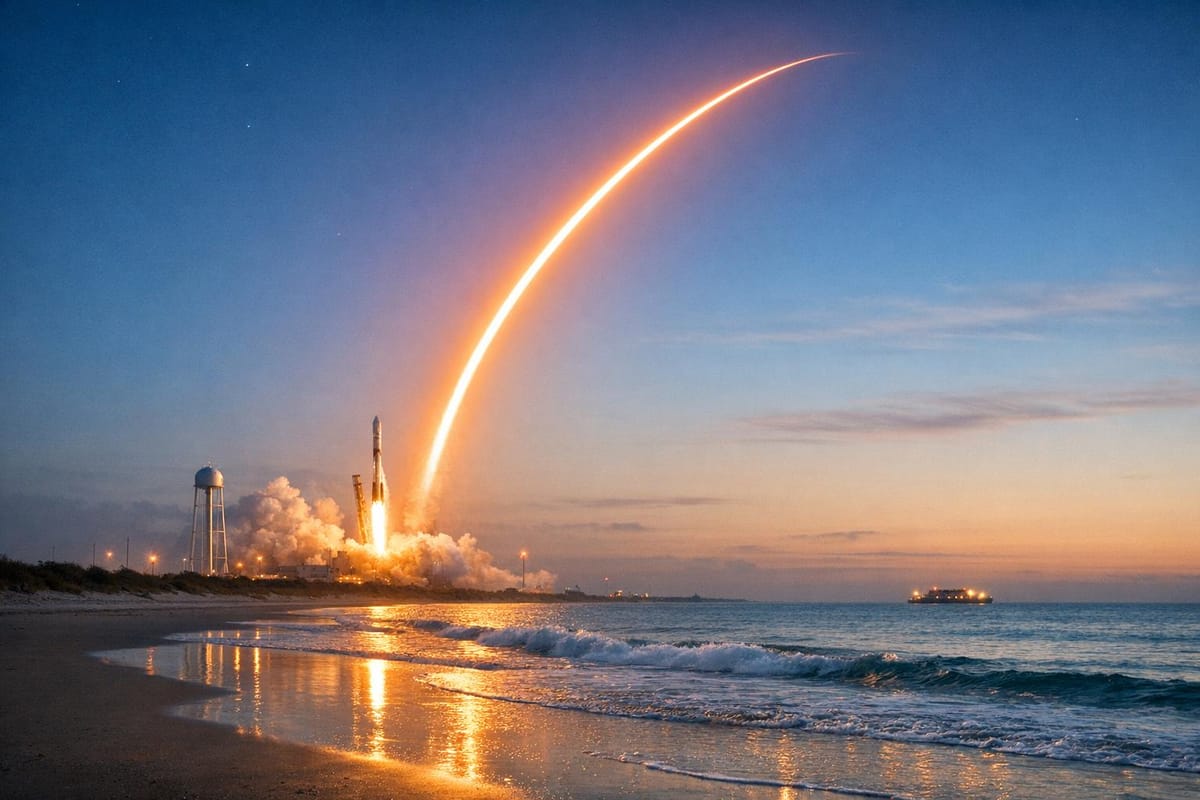
SpaceX is gearing up for an early morning launch, aiming to deploy 29 satellites as part of its Starlink internet service. Liftoff is scheduled for 5:20:50 a.m. EST (1020:50 UTC) from Space Launch Complex 40 at Cape Canaveral in Florida.
Launch Details and Weather Outlook
Weather conditions appear favorable for the launch, with forecasters from the 45th Weather Squadron predicting an 85% chance of acceptable conditions during the four-hour launch window. However, a cold front moving into central Florida later in the day could potentially reduce this to just 30% if the launch is delayed to Saturday.
Following the launch, the Falcon 9’s first stage booster, identified as B1069, is set to return to Earth and attempt a landing on the drone ship A Shortfall of Gravitas, stationed in the Atlantic Ocean east of The Bahamas.
A Milestone for Booster B1069
The Falcon 9 booster B1069 has an impressive flight history. It is embarking on its 30th flight since joining the SpaceX fleet in December 2021 for the CRS-24 space station cargo mission. Although the booster sustained significant damage during its initial landing, it resumed operations in August 2022 and has since completed 25 Starlink launches as well as missions for Eutelsat HOTBIRD 13-F, OneWeb 1, SES-18, and SES-19.
SpaceX’s Busy Launch Schedule
This mission marks SpaceX’s 25th Falcon 9 launch of the year, contributing to the extensive operational history of the Falcon 9 rocket, which has now flown 607 missions since its introduction in 2010. The inclusion of Starlink V2 Mini satellites in this launch continues SpaceX’s commitment to expanding its global satellite internet network.
As anticipation builds, the Falcon 9 is poised to light up the pre-dawn sky, showcasing yet another milestone in SpaceX’s ongoing pursuit of innovation and reliability in space exploration.
Comments ()