SpaceX's Falcon 9 completes Starlink satellite launch from Florida
SpaceX launched 29 Starlink satellites from Cape Canaveral on Mar 19, 2026, despite weather delays.
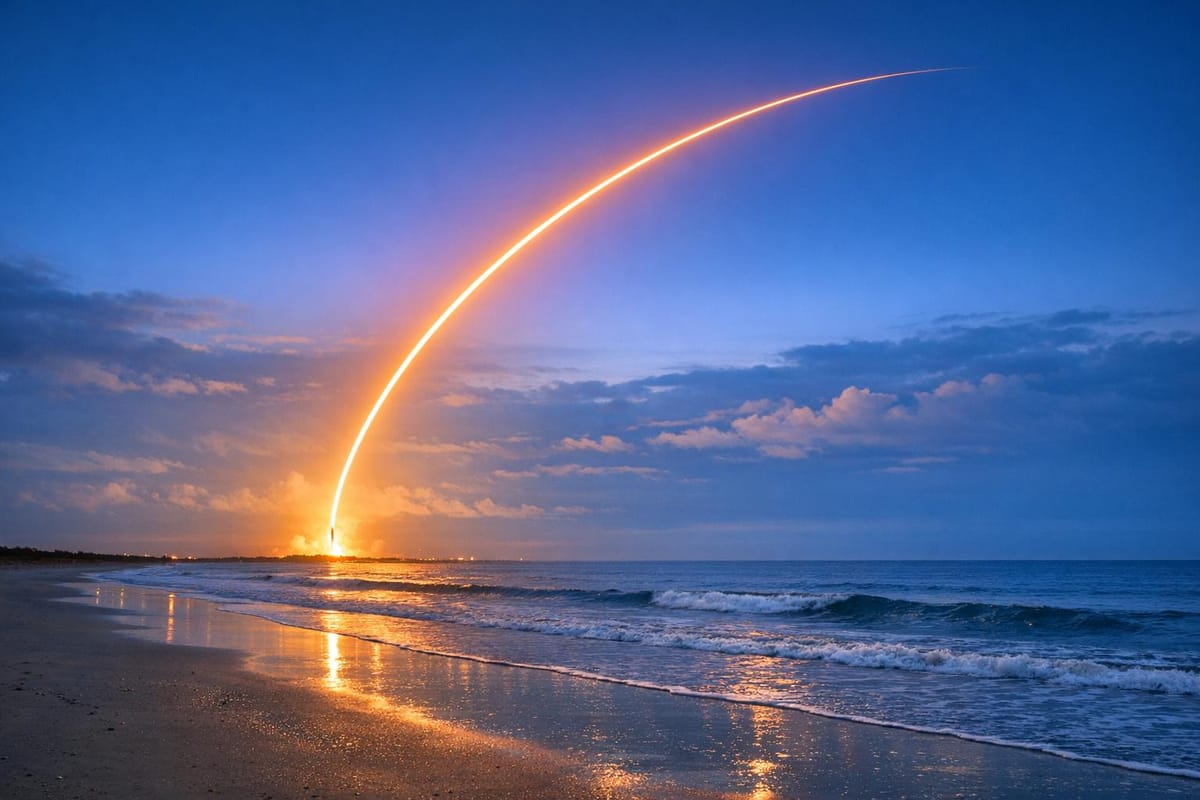
In yet another demonstration of its pioneering approach to space exploration, SpaceX successfully launched a Falcon 9 rocket carrying 29 Starlink satellites on March 19, 2026. The mission, conducted from Cape Canaveral Space Force Station’s Space Launch Complex 40, marked a significant step in the company's ongoing expansion of global broadband coverage. Weather challenges initially delayed the liftoff, but the team ultimately overcame the hurdles to deliver a smooth and successful launch.
Overcoming Weather Delays
The launch, designated as Starlink 10-33, was initially scheduled to begin within a window opening at 6:35 a.m. ET. However, concerns over weather conditions, including thick cloud layers and a nearby cold front, prompted delays. The 45th Weather Squadron had forecasted a 25 to 40 percent probability of unfavorable weather due to conditions such as the cumulus cloud rule. Despite the uncertainty, they also noted a 60 to 75 percent chance of favorable weather conditions for the launch window.
As the morning progressed, the team took full advantage of breaks in the cloud cover. Finally, at 10:20 a.m. ET, the Falcon 9 rocket roared to life and lifted off at approximately 10:21 a.m. ET. Observers along the Space Coast eagerly watched, though many were unable to glimpse the rare "jellyfish" effect - a phenomenon that occurs when sunlight illuminates a rocket's vapor trail - due to persistent clouds.
A Milestone for Reusability
The first-stage booster used in this mission, identified as B1077, made history with its 27th flight. This achievement underscores SpaceX's continued commitment to reusable rocket technology, a cornerstone of the company’s cost-saving and sustainability efforts. B1077 has previously supported significant missions, including NASA’s Crew-5 mission to the International Space Station on October 22, 2022, and 19 prior Starlink launches. Other notable flights included GPS III Space Vehicle 06, Inmarsat I6-F2, and CRS-28.
Following stage separation, the booster successfully landed on the drone ship Just Read the Instructions in the Atlantic Ocean approximately eight and a half minutes after liftoff. This successful recovery paves the way for the booster’s potential reuse in future missions. Onlookers can anticipate its return to Port Canaveral, where the well-traveled rocket will undergo inspection and preparation for its next flight.
Expanding Global Internet Coverage
The 29 Starlink satellites carried aboard this mission joined a rapidly expanding constellation of satellites in low-Earth orbit. According to figures from Dr. Jonathan McDowell of the Harvard-Smithsonian Center for Astrophysics, before this launch, there were already 10,047 Starlink satellites in orbit, with 7,903 operational. The additional satellites launched on this mission will enhance Starlink’s ability to provide broadband internet to remote and underserved regions across more than 150 countries.
As FOX 35 reported, Starlink is "mostly serving remote and underserved areas", highlighting its importance in bridging the digital divide. These frequent launches are a testament to SpaceX’s capacity to deliver on its mission of making reliable, high-speed internet more accessible to communities lacking traditional infrastructure.
Precision and Preparation
SpaceX’s meticulous approach to mission preparation was evident throughout the launch. The process began with the launch director’s "go" for propellant load, followed by the fueling of rocket-grade kerosene and liquid oxygen into the first stage. Second-stage liquid oxygen was loaded next, and the engines were chilled in preparation for ignition. Final prelaunch checks ensured that all systems were nominal before the Falcon 9’s engines ignited, propelling the vehicle skyward.
The flexibility of SpaceX’s team proved critical to the mission’s success. Although the original plan allowed for a launch as early as 6:35 a.m. ET, the launch window remained open until 10:35 a.m. ET. This provided the necessary time to address both weather and operational considerations. As the Florida Today Space Team emphasized, "SpaceX has until 10:35 a.m. to make the liftoff if needed", showcasing the balance of precision and patience required for such complex operations.
Inspiring Progress in Spaceflight
The successful deployment of additional Starlink satellites and the seamless recovery of booster B1077 highlight SpaceX’s growing capabilities within the commercial space sector. Each mission represents an important step forward in the company’s vision to make space more accessible and improve connectivity on Earth.
As this latest mission concludes and the Falcon 9 booster returns to Port Canaveral, SpaceX continues to inspire by demonstrating what is possible in modern space exploration - even on cloudy, unpredictable mornings. The mission serves as a reminder of the innovation and determination that drive progress in the quest to connect the world.
Comments ()