SpaceX Dragon Completes ISS-Boosting Mission, Prepares for Return
SpaceX CRS-33 Dragon undocked from the ISS after six months, having reboosted the station and returning experiments.
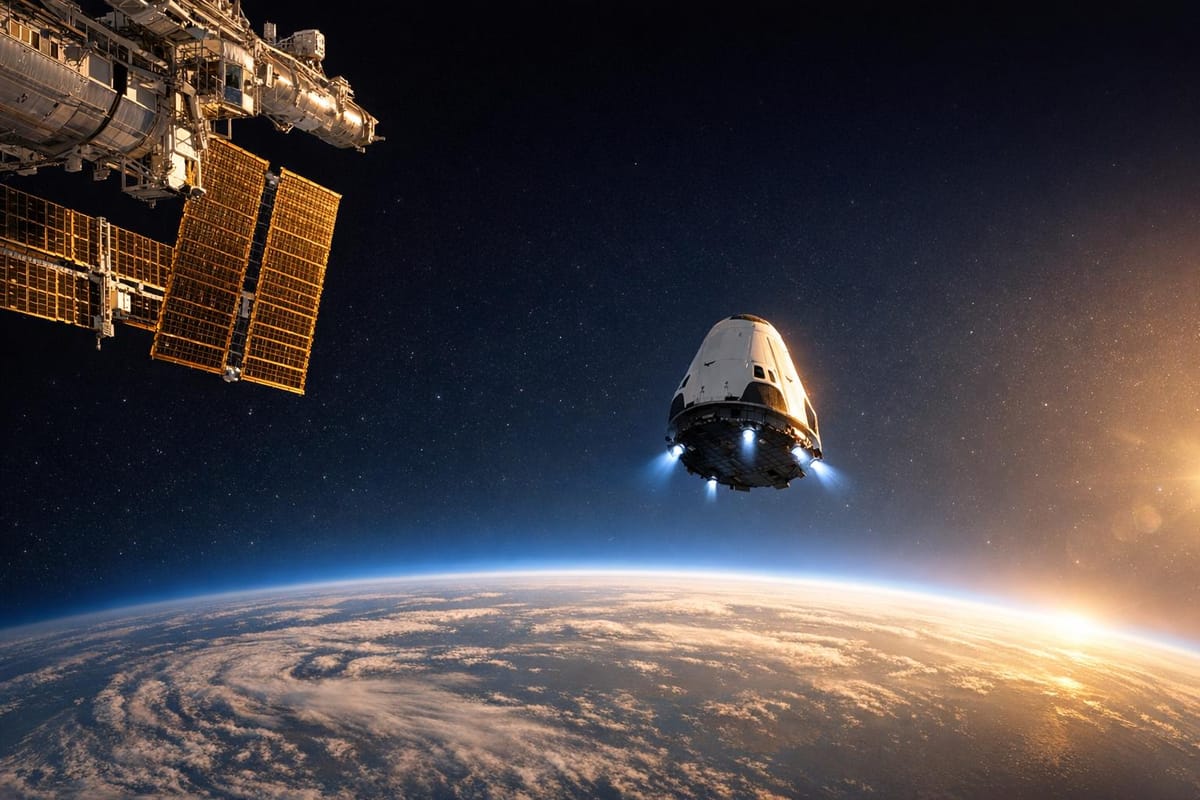
A SpaceX Dragon cargo capsule has concluded its groundbreaking mission to the International Space Station (ISS) and is now heading back to Earth. The capsule, which spent approximately six months docked at the orbiting laboratory, undocked as planned on February 26 at 12:05 p.m. EST (1705 GMT).
The Dragon, part of SpaceX's Commercial Resupply Services (CRS) program, is scheduled to splash down in the Pacific Ocean off the California coast on February 27 at approximately 2:44 a.m. EST (0744 GMT). The reentry and splashdown will not be broadcast live.
A Historic Mission
This mission, designated CRS-33, marked the 33rd robotic cargo resupply run conducted by SpaceX for NASA. The capsule delivered around 5,000 pounds (2,270 kilograms) of supplies and scientific equipment to the ISS when it arrived on August 25, 2025. However, its contributions extended beyond cargo delivery.
During its stay at the ISS, the Dragon demonstrated a new capability: boosting the station’s orbit. Historically, such reboosts have been performed by Russia's Progress freighters. However, as uncertainty looms over Russia’s continued participation in the ISS program, Dragon's performance has provided a critical alternative.
"During its time docked to the station, Dragon performed six reboosts - five in 2025 and a final maneuver on Jan. 23 - before preparations for its departure began", NASA officials noted in a statement issued on February 23. This capability helps maintain the ISS's altitude and counteract atmospheric drag, which is vital for the station’s safe operations and long-term sustainability.
What’s Coming Back to Earth
Unlike other cargo spacecraft such as Progress, Northrop Grumman’s Cygnus, or Japan’s HTV-X, the Dragon capsule is reusable and capable of carrying cargo back to Earth. For this mission, it is returning with a variety of scientific experiments and materials.
Among the cargo being brought back are samples from the Euro Material Aging study, which exposed 141 materials to space for a year to assess how coatings, insulation, and 3D-printed components degrade in the harsh environment. The capsule is also hauling results from Thailand's Liquid Crystals experiment, which studied the stability of films used in electronics under microgravity.
Both of these investigations could have far-reaching implications. "Both could lead to stronger spacecraft, better displays and improved optical devices on future missions", NASA officials explained.
A Versatile Solution for ISS Sustainability
Dragon’s successful reboosts highlight its potential to play a key role in maintaining ISS operations as the station approaches the end of its projected lifespan in 2030. If Russia ends its involvement with the ISS, as has been speculated, Dragon and other spacecraft like Cygnus could help fill the gap to ensure the station remains safely in orbit.
As SpaceX continues to expand the boundaries of what its spacecraft can achieve, missions like CRS-33 demonstrate the growing versatility of private spaceflight in supporting global scientific endeavors and long-term human presence in space. For now, the Dragon capsule moves into its final phase of this mission - a safe return to Earth with valuable scientific cargo in tow.
Comments ()