SpaceX confidentially submits IPO documents signifying valuation growth
Analysis of SpaceX's confidential IPO filing and the rebuilt xAI layer central to its valuation.
SpaceX, the private aerospace company led by Elon Musk, has officially taken a significant step toward going public. On April 1, the company confidentially submitted documents for an initial public offering (IPO) with the U.S. Securities and Exchange Commission (SEC). While the full financial details remain under wraps for now, this move marks a pivotal moment for SpaceX as it targets unprecedented valuation heights.
Aiming for Record-Breaking Valuation
According to reports, SpaceX initially sought a valuation of $1.75 trillion and aimed to raise up to $75 billion through the IPO. However, it has reportedly increased its valuation target to over $2 trillion during discussions with potential investors. If successful, this IPO could surpass Saudi Aramco's $29 billion debut in 2019, making it the largest IPO in history. A public filing and market debut are expected as early as June, pending regulatory reviews.
The Broader Focus Beyond Rockets
Unlike a traditional aerospace company, SpaceX is positioning itself as a diverse technological ecosystem. The IPO pitch centers around a combined entity that includes Starlink, its satellite internet division; xAI, an artificial intelligence venture acquired earlier this year; and X, the social network formerly known as Twitter. This integration highlights SpaceX's pivot toward leveraging AI and orbital data centers as central components of its valuation thesis.
A critical element in this ecosystem is Terafab, a semiconductor joint venture between Tesla, SpaceX, and xAI. Announced in March, Terafab is set to produce advanced 2-nanometer chips, with initial outputs estimated at 100,000 wafer starts per month. This project, valued at $20–25 billion, aims to supply the orbital data centers that underpin the combined business model. However, the scalability and cost assumptions surrounding this effort still require further validation.
Challenges in Rebuilding xAI
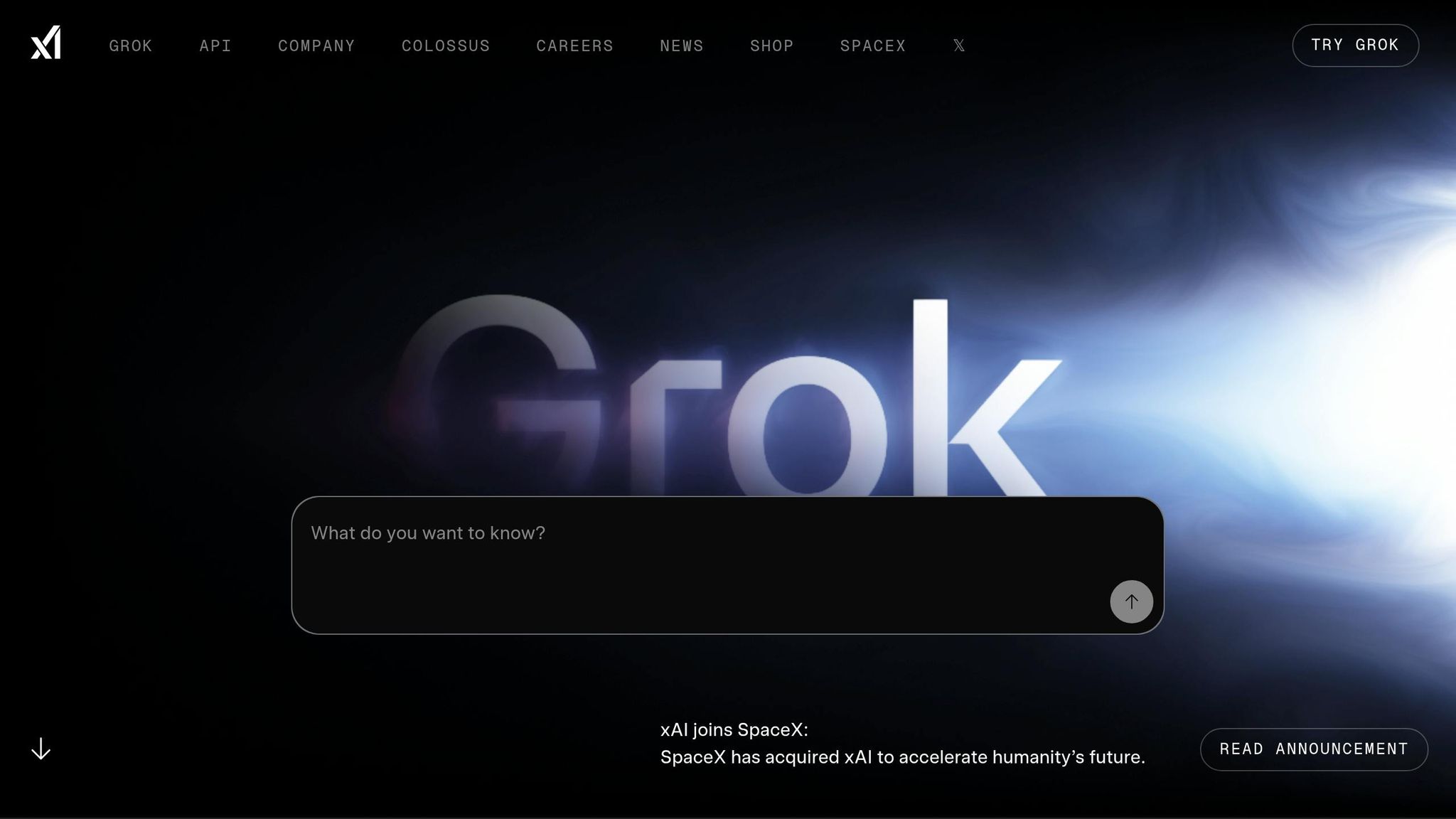
A key challenge for SpaceX lies in the state of xAI, the artificial intelligence company that Musk himself admitted is being rebuilt "from the foundations up." As Musk explained in a March 12 post on X, "xAI was not built right first time around, so is being rebuilt from the foundations up. Same thing happened with Tesla."
The rebuilding process comes on the heels of significant turnover at xAI. By March 27, the last two original co-founders, Manuel Kroiss and Ross Nordeen, had departed, leaving none of the founding team from 2023 remaining. Musk acknowledged this in another post, stating, "Many talented people over the past few years were declined an offer or even an interview @xAI. My apologies." He also revealed efforts to reengage previously declined candidates.
However, the rebuilding process has shown signs of progress. xAI recently brought on high-profile hires such as Andrew Milich and Jason Ginsberg, who scaled the coding tool Cursor to a $2 billion revenue run rate, and Devendra Chaplot, a co-founder of Mistral AI. These hires reflect a renewed focus on strengthening the AI layer, though their contributions remain recent and untested at the time of the IPO submission.
Key Questions for Investors
The confidential IPO filing means investors will have to wait until at least April or May to access a public prospectus. This document will shed light on the integration of xAI, Starlink's financial trajectory, and the feasibility of the orbital data center strategy. Central to the valuation will be the AI component, which Musk has compared to Tesla's early struggles and eventual success. "Tesla went through its own period of foundational rebuilding... before becoming one of the most valuable companies on earth", Musk stated, framing xAI's current challenges as part of a larger precedent.
Ultimately, the prospectus will need to answer whether SpaceX's ambitious vision aligns with the realities of its current progress and timeline. Until then, both the valuation and the AI thesis remain speculative. Investors and market analysts will closely monitor how SpaceX addresses these uncertainties in the coming months.
SpaceX’s journey to the public market is poised to be a historic event, but much hinges on its ability to solidify the AI and data center components that have become central to its identity. For now, the world waits for the full picture to emerge.
Comments ()