NASA’s SpaceX Crew-11 returns to Earth after successful mission
SpaceX Crew-11 splashed down after 165+ days on ISS, returning from research in biology, manufacturing, and tech.
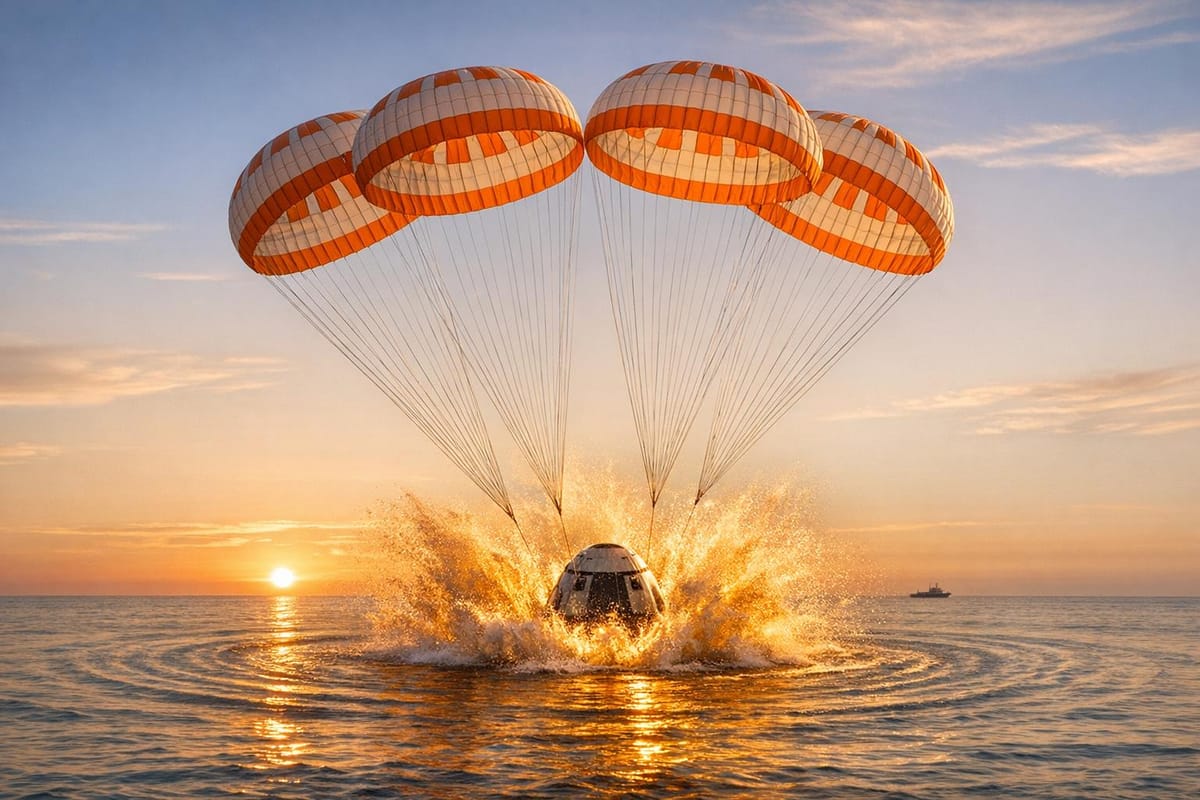
NASA’s SpaceX Crew-11 astronauts have safely returned to Earth after completing a groundbreaking 165-day mission aboard the International Space Station (ISS). The team splashed down off the coast of California early Thursday morning, marking the conclusion of a mission centered on advancing scientific discovery and innovation in space.
The crew - comprising NASA astronauts Mike Fincke and Zena Cardman, Japan Aerospace Exploration Agency (JAXA) astronaut Kimiya Yui, and Roscosmos cosmonaut Oleg Platonov - played a pivotal role in supporting hundreds of research investigations aboard the ISS. Their work spanned a range of disciplines, including biology, physical sciences, in-space manufacturing, and technology development, alongside inspiring the next generation with student-led experiments.
Key Scientific Contributions
During their mission, the Crew-11 astronauts worked on several cutting-edge investigations, many sponsored by the ISS National Laboratory®. These projects leverage the unique conditions of microgravity to drive innovation and provide benefits for life on Earth. Some of the highlighted studies include:
- Scientists at the Wake Forest Institute for Regenerative Medicine studied engineered liver tissue containing blood vessels in microgravity. This research, stemming from NASA's Vascular Tissue Challenge, seeks to advance tissue engineering techniques for potential organ replacement applications on Earth and in future space missions.
- The Cedars-Sinai Medical Center examined whether induced pluripotent stem cells divide more rapidly in microgravity, potentially paving the way for breakthroughs in regenerative medicine. This investigation could expand in-space manufacturing capabilities to produce therapies targeting conditions like heart disease and neurodegenerative disorders.
- A collaboration between Axiom Space and open-source software leader Red Hat validated edge computing technologies on the ISS through the Red Hat Device Edge platform. This research demonstrated real-time data processing capabilities critical for scaling research and development in low Earth orbit.
- TransAstra Corporation used Voyager Technologies’ Bishop Airlock to test an inflatable capture bag system designed to collect space debris. As the low Earth orbit economy grows, this technology could become essential for maintaining orbital safety for spacecraft, satellites, and astronauts.
- In a study led by Arizona State University and funded by the U.S. National Science Foundation, researchers investigated how germicidal ultraviolet light impacts the formation of biofilms in space-based water systems. Findings from this project, conducted in collaboration with BioServe Space Technologies, aim to enhance life-support systems in space and address biofilm-related challenges on Earth.
Inspiring the Next Generation
The Crew-11 mission also included numerous student-driven investigations, designed to inspire young minds and foster the future space workforce. One standout project, part of the Genes in Space™ competition, explored the use of bacteriophages as therapeutic agents in microgravity. Additionally, students in five states participated in Higher Orbits Go For Launch! experiments, studying topics like algae, green beans, silkworms, and slime mold in space.
A Mission to Benefit Humanity
Each of these initiatives underscores the ISS National Laboratory’s mission to harness the space environment to advance scientific discovery, support economic development in low Earth orbit, and improve life on Earth. This successful mission by NASA’s SpaceX Crew-11 demonstrates how international collaboration and innovation in space can have far-reaching impacts.
For more information on the research conducted during this mission, including detailed findings and future implications, visit the ISS National Laboratory’s webpage.
Comments ()